Some cars aren't just built; they are sculpted. They are less about transportation and more about pure, visceral emotion. Few vehicles in history embody this philosophy like the legendary
C3 Corvette Stingray. It is a rolling piece of art, a "shark-like" profile that defined an entire era of American automotive artistry.
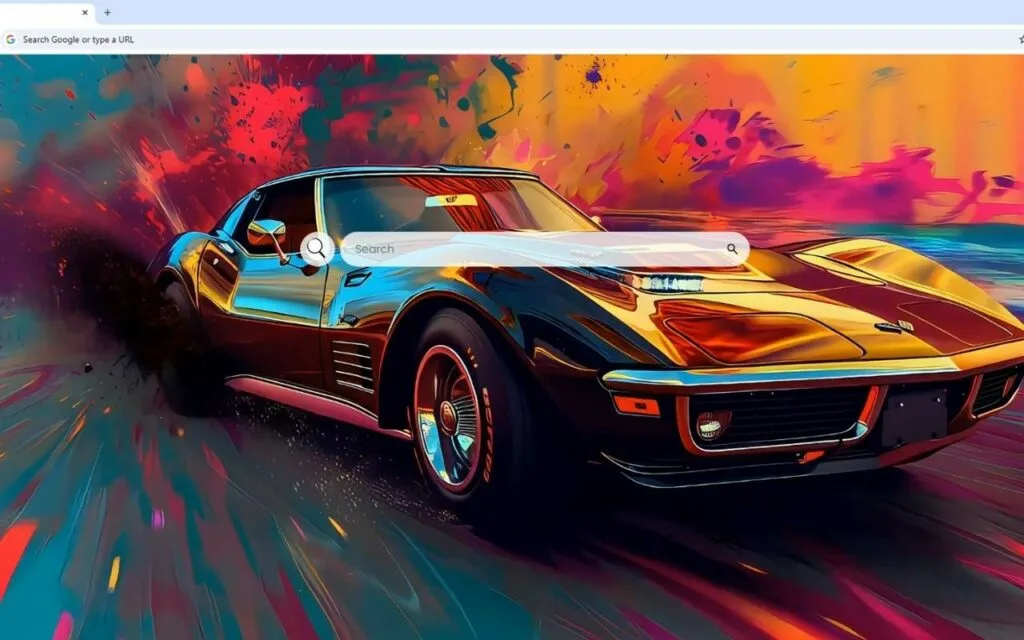
This spirit is captured perfectly in a breathtaking digital painting. The composition showcases the iconic C3 generation in all its muscular glory—the long hood, the aggressive "split front bumper," the signature side gills. But this is not just a portrait. The car is a focal point for an explosion of "vibrant teals, fiery oranges, and electric pinks," an abstract backdrop that symbolizes the speed, power, and revolutionary impact of this American icon.
This stunning fusion of photorealistic detail and abstract expressionism is the perfect centerpiece for a modern digital space, like a
Chevrolet Corvette Live Wallpaper. It's a reminder that true artistry breaks boundaries. But to fully appreciate the art, you must first understand the legend. What forged this icon, and why does it remain the high-water mark for American car design?

The Birth of the Shark: A Legend's Origin
The C3 Corvette didn't just appear. It was the result of a secret, passionate project by some of the greatest minds in automotive design. Its story begins not on an assembly line, but in a concept studio.
From Mako II Concept to Street-Legal Art
The origin of the C3 Corvette Stingray is a piece of automotive folklore. In the mid-1960s, GM's legendary design chief, Bill Mitchell, was inspired by a mako shark he had caught. He tasked his team, including a brilliant young designer named Larry Shinoda, to create a car that captured that same predatory, natural grace.
The result was the Mako Shark II concept car of 1965. It was a radical, futuristic vision that stunned the world. Its defining features were the "Coke bottle" shape (the pinched-in waist), the impossibly long hood, and the sharp, aggressive fender flares. It looked more like a spaceship than a car, and the public went wild.
GM knew it had a hit. The challenge was translating this wild concept into a production vehicle. In 1968, they succeeded. The C3 generation Corvette was unleashed, and it looked almost identical to the concept, a rare feat in the auto industry.
The Anatomy of an Icon
The artwork's focus on the C3's "distinctive shark-like profile" is spot-on. Every line on this car is intentional, creating a sense of motion even at a standstill.
- The Split Front Bumper: Seen in the art, this highly desirable feature was only available from 1968 to 1972. It perfectly framed the "shark's mouth" grille, giving the car an aggressive, menacing face.
- The "Side Gills": The vertical vents on the front fenders were a direct nod to the Mako Shark concept, adding to the car's aquatic, predatory persona.
- The T-Top Roof: The C3 generation popularized the T-Top, offering drivers an open-air experience without sacrificing the stunning profile of the coupe.
- The Fenders: The "perfect curve of its fenders" mentioned in the art's description was the car's defining trait. These high, muscular arches rose over the wheels, giving the car its "muscular glory."
Deconstructing the Masterpiece: Car as Canvas
The digital painting described is a work of "American automotive artistry" itself because it perfectly understands its subject. It uses a brilliant artistic technique—the contrast of realism and abstraction—to tell the story of the C3 Corvette.
The Photorealistic Heart of the Machine
The artist chose to render the
Corvette Stingray itself with "meticulously rendered details." This is crucial. We see the "gleaming chrome bumpers" (a hallmark of the pre-1973 models) and the way the light plays on every curve.
This photorealism represents the
engineering side of the icon. It's the tangible, mechanical beauty—the result of thousands of hours of sculpting clay, shaping steel, and bolting together a high-performance V8 engine. It is the car as a
physical object, a masterpiece of industrial design.
The Soul of Speed: An Abstract Expression
Then, the artist shatters this realism with the "explosive backdrop of color." The "vibrant teals, fiery oranges, and electric pinks" are the car's
soul made visible.
This "abstract expressionism" symbolizes what the C3 Corvette
represents:
- Speed: The dynamic splashes burst outward, suggesting the raw power of the big-block V8.
- Revolution: This design was the revolution. It broke from the boxy, conventional designs of the past and ushered in an era of fluid, bold styling.
- Freedom: The C3 is the ultimate symbol of the American open road, a breaking of boundaries.
The painting's central theme is this contrast: the C3 Corvette is a perfectly engineered machine
and a wild, abstract, emotional idea all at once.

The Collector's Guide: Owning a Piece of the Stingray Legacy
The C3 Corvette Stingray remains one of the most popular and recognizable classic cars in the world. Its popularity is fueled by its stunning looks, its deep cultural impact (it was the "Astronaut's car" for a reason), and its raw V8 power. But for collectors, not all C3s are created equal.
Tips for the Aspiring C3 Collector
If you're dreaming of putting a piece of "American automotive artistry" in your own garage, here's what to look for.
- The "Chrome Bumper" Era (1968-1972): As seen in the artwork, the cars with chrome front and rear bumpers are the most desirable. The 1968-1969 models with the "split" front bumper are the holy grail for many.
- Big-Block vs. Small-Block: The C3 was available with a range of engines, but the "big-block" 427 and 454 V8s were the tire-shredding monsters that built the legend.
- Manual vs. Automatic: A four-speed manual transmission adds to the raw, engaging driving experience and is highly sought after by collectors.
What's your favorite generation of the Corvette? Do you prefer the early chrome-bumper C3s or the later models?
Table: C3 Corvette: The Collector's "Golden Era" vs. Later Models
| Feature |
Golden Era (1968–1972) |
Malaise Era (1975–1982) |
| Bumpers |
Gleaming chrome, (split front '68-'72) |
Body-colored urethane (rubber) |
| Engine |
Peak V8 Power (e.g., 427, 454 Big-Blocks) |
Lower-compression, smog-regulated engines |
| Horsepower |
Often 350-450+ hp |
Typically sub-200 hp (e.g., the 1980 California-only 180 hp) |
| Collector View |
The "muscle" era; highly desirable |
More affordable; a great entry point to C3 ownership |
✨ From Analog Dash to Digital Dashboard
The C3 Corvette's interior was just as futuristic as its exterior. It featured a driver-focused cockpit with large, round gauges that made the driver feel like an airline pilot. It was the "analog command center" of its day.
Today, we have a new command center: our digital desktop. And by using a
Chevrolet Corvette Live Wallpaper featuring this stunning art, you merge that classic analog soul with modern digital function. The art becomes the backdrop for a new, high-performance dashboard.
🔗 Quick Access Shortcuts: Your "T-Top" to an open web. Get to YouTube, Netflix, or ChatGPT instantly.➕ Custom Shortcuts: Your "custom build." Add your own favorite websites and tools, just like adding a new carb to a 427.🔍 Search Bar: Your "navigation system," seamlessly integrated to find anything you need.🕒 Clock & Date: A modern, clean display that's as sharp as the C3's handling.🎮 Play Games: Your "pit stop" for built-in entertainment during your browsing breaks.
The Enduring Legacy of American Artistry
The C3 Corvette Stingray is more than just a classic car. It is a canvas for American ambition, a high-octane sculpture, and a definitive piece of "American automotive artistry." It was a car that dared to look like nothing else on the road, a design so powerful that it continues to inspire artists and enthusiasts decades later.
The digital painting that captures this icon against a burst of abstract color isn't just a beautiful image; it's a perfect summary of the car's legacy: a meticulously engineered machine with a wild, untamable soul. It's a true masterpiece, celebrating an American legend.