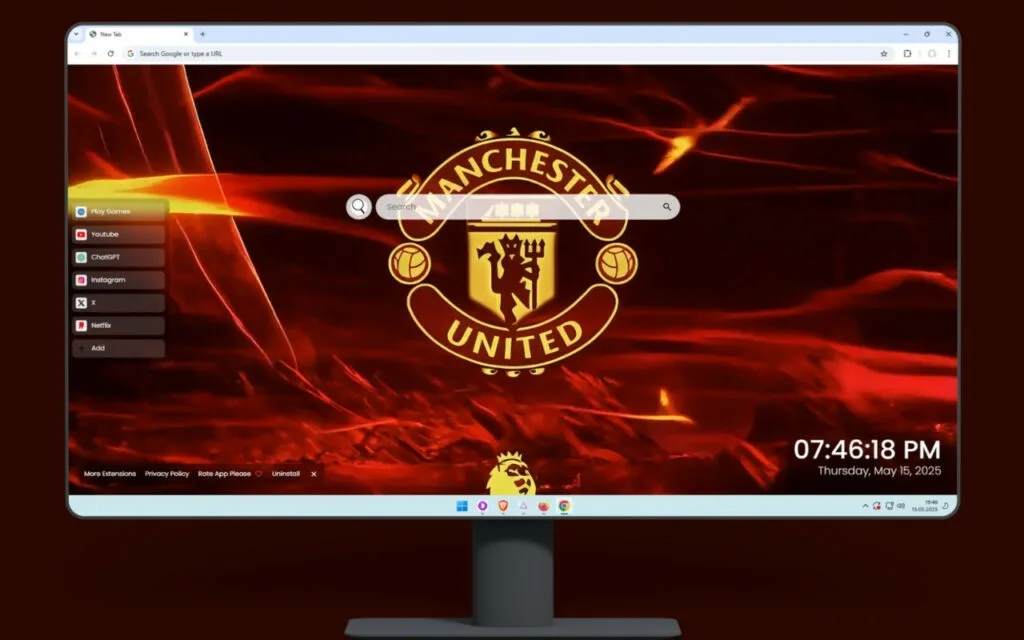
There is a color, a symbol, that speaks a universal language of "fiery passion" to hundreds of millions of fans around the globe: the unmistakable red of Manchester United. It's more than a team color; it's an identity. This identity is captured in breathtaking fashion in the
official Manchester United wallpaper, a striking composition that is less a background and more a declaration of allegiance.
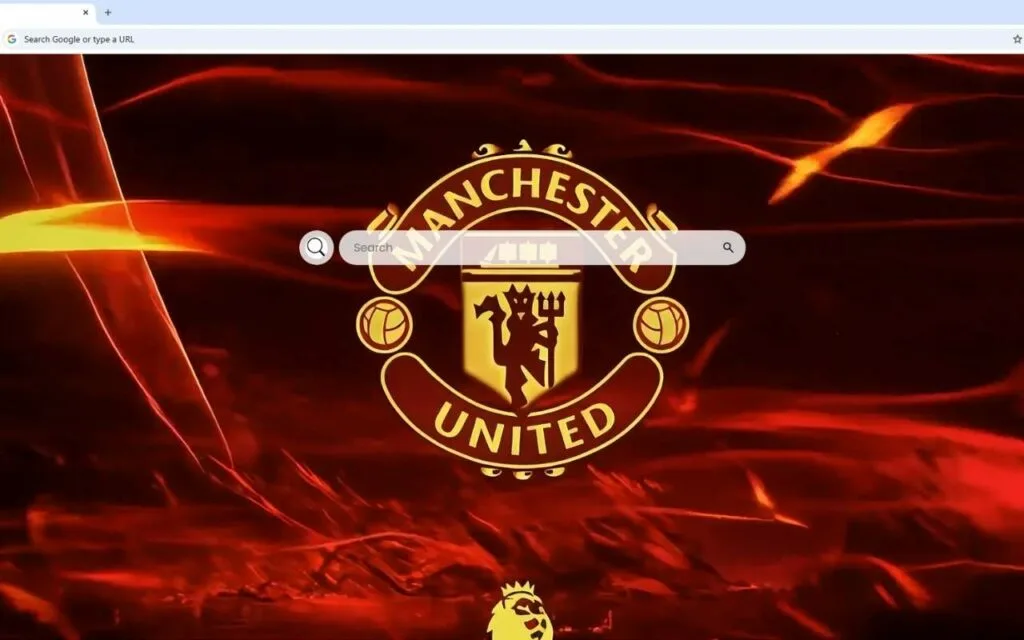
The image is a "dynamic inferno." The iconic
Red Devils crest stands proud in "gleaming gold," a beacon of glory against a background that "erupts with flowing ribbons of deep crimson." This isn't just a design; it's a story. It's the "raw power" of a club built on an "attacking philosophy," a "sense of unstoppable momentum" that defined its most legendary eras. This visual representation of what it means to be United—"forged in fire, defined by glory"—is the perfect emblem for the modern fan.
But to truly understand the power of this
Manchester United wallpaper, you must first understand the story behind the emblem it so beautifully showcases. What is the origin of the "Red Devil," and how did this crest come to command such global reverence?
The Origin of the Red Devil: A Story of Rebirth
The "legendary ship and devil emblem" is one of the most recognized logos in world sport, but its "Red Devil" component is a surprisingly modern addition, born from the ashes of tragedy and the mind of a visionary.
From "The Heathens" to "The Red Devils"
The club, founded in 1878 as Newton Heath LYR Football Club, didn't always have such an intimidating moniker. When the legendary Sir Matt Busby took charge after World War II, he began to build a young, exciting, and attacking-minded team. This team, affectionately known as the "Busby Babes," was the toast of England until the 1958 Munich Air Disaster claimed the lives of eight players.
Busby, who fought for his own life in the hospital, was forced to rebuild his club and his life from the ground up. In the 1960s, as his new team began to dominate once more, he sought a new identity—one that was more intimidating than "Babes." He found inspiration in a local Salford rugby team that had toured France under the nickname "Les Diables Rouges," or "The Red Devils."
Busby loved it. It was defiant, fiery, and captured the "attacking philosophy" he was re-instilling. It was a statement: this was no longer a team defined by tragedy, but one "forged in fire," ready to strike fear into its opponents. The "dynamic inferno" seen in the
Manchester United wallpaper is a direct visual link to this powerful, defiant rebirth.
The Evolution of the Crest: Ship, Shield, and Devil
The
Red Devils crest itself is a tapestry of Manchester's history. The "meticulous rendering" of the badge's details, as seen in the wallpaper, pays homage to a rich legacy.
- The Ship: The "intricate ship" at the top of the badge is the oldest element, a fixture on the Manchester coat of arms. It represents the Manchester Ship Canal, a feat of engineering that made the city an international port and a global hub of industry and trade.
- The Devil: The "Red Devil" with his "three-pronged fork" was officially added to the club badge in 1970, replacing the city's three-stripe coat of arms. This was the final step in cementing the club's new identity.
- The Banners: The words "Manchester United," flowing in banners above and below the shield, were a design choice that cemented the club's name as the central focus.
This evolution is a key story for collectors and fans who want to understand the emblem's heritage.
"Glory Glory Man United": Why the Crest Commands Reverence
That gleaming gold crest is more than a logo; it's a symbol of a "storied club" and a philosophy that has captured the imagination of the world. The club's popularity isn't just due to its success; it's due to
how it achieved that success.
The Philosophy of Attack
The "flowing ribbons of deep crimson" in the
Manchester United wallpaper are not just aesthetically pleasing; they are a metaphor. They represent the "unstoppable momentum" of United's "attacking philosophy," a style of play demanded by the Old Trafford faithful.
This philosophy was the bedrock of the two greatest dynasties in the club's history. Sir Matt Busby's team, with the "Holy Trinity" of Best, Law, and Charlton, played with a swagger that conquered Europe in 1968. This was later perfected by Sir Alex Ferguson, whose "Class of '92" and subsequent teams were famous for their relentless, high-octane football, often scoring dramatic late goals in "Fergie Time."
The "fiery passion" of the wallpaper is a reflection of this on-pitch doctrine: always attack, never surrender, and fight until the final whistle.
A Global Symbol of Resilience and Triumph
Today,
Manchester United is one of the most supported sporting institutions on Earth, with a fan base estimated to be over 1.1 billion. The
Red Devils crest is a symbol they wear with pride, from the streets of Manchester to the markets of Singapore.
- Resilience: The "forged in fire" identity resonates because it's true. The club rose from the ashes of Munich to win the European Cup just 10 years later.
- Triumph: The "defined by glory" part is undeniable. It's the club of 20 top-flight league titles, 12 FA Cups, and three European Cups, including the historic "Treble" of 1999.
- Official Touch: The "subtle inclusion of the Premier League logo" on the wallpaper adds that "official touch," connecting the club's fiery identity to its status as a titan of the world's most-watched league.
What does the
Red Devils crest mean to you? Is it a symbol of a specific player, a great match, or a personal memory?
The Collector's Guide: Owning Your Piece of the Legacy
For a club this "storied," it's no surprise that fans and collectors cherish any item that bears the emblem. Whether it's a vintage shirt or a new digital theme, it's about showing your colors.
Tips for Collectors: From Vintage Kits to Digital Themes
For "collectors" of physical memorabilia, the
Red Devils crest is the ultimate mark of authenticity.
- Vintage Kits: The holy grails of collecting. A 1999 Champions League final shirt, a 1985 FA Cup final kit, or any of the iconic "Busby Babes"-era shirts are priceless.
- Match-Worn Items: For the ultimate collector, nothing beats a match-worn shirt, complete with the player's sweat and the embroidered crest.
- Authenticity: Always look for official licensing—that "official touch" is everything. The quality of the crest's embroidery is often the first sign of a genuine item.
The Evolution of the Manchester United Emblem
| Era |
Emblem |
Key Features & Notes |
| 1878-1902 |
Newton Heath |
The "L&YR" (Lancashire & Yorkshire Railway) crest. |
| 1902-1960s |
Manchester City Arms |
The crest of the city of Manchester, featuring the ship, antelope, and lion. |
| 1960s-1970 |
Shield Design |
A simplified shield with the ship above and red/white stripes, as seen on the '68 European Cup shirts. |
| 1970-1998 |
The Classic Devil |
The "Red Devil" is officially added. The banners read "Manchester United Football Club." |
| 1998-Present |
Modern Crest |
The version in the wallpaper. Streamlined, with "Football Club" removed. "Gleaming gold" and red. |
Your Digital "Old Trafford"
In the 21st century, our primary "wall" is our digital one. A
Manchester United wallpaper or a full browser theme is the modern-day "scarf," a way to carry the club's "fiery passion" with you. A well-designed theme transforms your browser into a personal fan zone, a digital "Stretford End."
Imagine your new tab, not as a blank space, but as a command center, "forged in fire":
🔗 Quick Access Shortcuts: Your "front four"—instantly get to YouTube, Netflix, ChatGPT, and your other key sites.➕ Custom Shortcuts: Your "squad sheet." Add your own favorite fan sites, news pages, and social media.🔍 Search Bar: Your "scouting network," seamlessly connected to your default search engine.🕒 Clock & Date: The official "matchday clock" for your digital life.🎮 Play Games: Your "half-time entertainment," with built-in games for a quick break.
The Banner of Passion
The
Red Devils crest, set against a "dynamic inferno" of crimson, is more than just a logo on a
Manchester United wallpaper. It is a story 140+ years in the making. It is the story of the Manchester Ship Canal, of Sir Matt Busby's defiant spirit, of Sir Alex Ferguson's "unstoppable momentum," and of the "fiery passion" of a global fanbase.
This emblem "commands reverence" because it has been "forged in fire" and is "defined by glory." It is, and always will be, a symbol of what it means to be United.